
Categories
PeoriaPublished October 13, 2026
Peoria, Arizona: From Spring Training to Lake Pleasant

Peoria covers enough of the West Valley that it can be difficult to describe with one picture.
Spend time around Downtown Peoria and you will find a part of the city with roots going back more than a century. Head toward 83rd Avenue and Bell Road and spring training becomes part of the landscape. Continue north along Lake Pleasant Parkway and the surroundings change again, eventually giving way to desert, trails, and Lake Pleasant.
It is all part of the Peoria story, but different areas can look and function very differently.
That is one of the most useful things to know about Peoria: where a property sits within the city can tell you almost as much as the Peoria address itself.
Peoria Started With Four Families From Illinois
Peoria traces its Arizona history to 1886, when four families from Illinois settled in the area and named the community after Peoria, Illinois. The city later incorporated in 1954.
That makes Peoria much older than many of the roads, shopping centers, and newer communities now associated with the northwest Valley.
Pieces of that earlier history can still be found around Downtown Peoria. The area includes historic buildings, Osuna Park, public art, community gathering spaces, and the Peoria Center for the Performing Arts.
That part of the city provides a very different view of Peoria from the development found farther north.
Peoria Was Once Called the “Rose Capital of the World”
Here is one of the more unexpected facts in Peoria’s history.
In 1956, Peoria was named the “Rose Capital of the World.”
That is probably not the first thing most people associate with Peoria today, but it is a reminder that the community existed long before Loop 101, P83, Lake Pleasant Parkway, and much of the development now found throughout the city.
Peoria has changed considerably since then, but pieces of its earlier history are still visible around the original downtown area.
Spring Training Became Part of Peoria’s Identity
Baseball is one of the more recognizable parts of Peoria today.
Peoria Sports Complex opened in 1994 as the first Major League Baseball spring training facility designed to be shared by two teams. The Seattle Mariners and San Diego Padres use the complex, which also supports year-round player development for both organizations.
The surrounding P83 Entertainment District is centered around the 83rd Avenue corridor south of Bell Road and includes restaurants, shopping, entertainment, and the Sports Complex.
During spring training, this part of Peoria receives plenty of attention, but the surrounding area remains an active commercial and entertainment district throughout the rest of the year as well.
Lake Pleasant Changes the Picture Again
Keep heading north through Peoria and the surroundings gradually change from the areas around Bell Road and Loop 101.
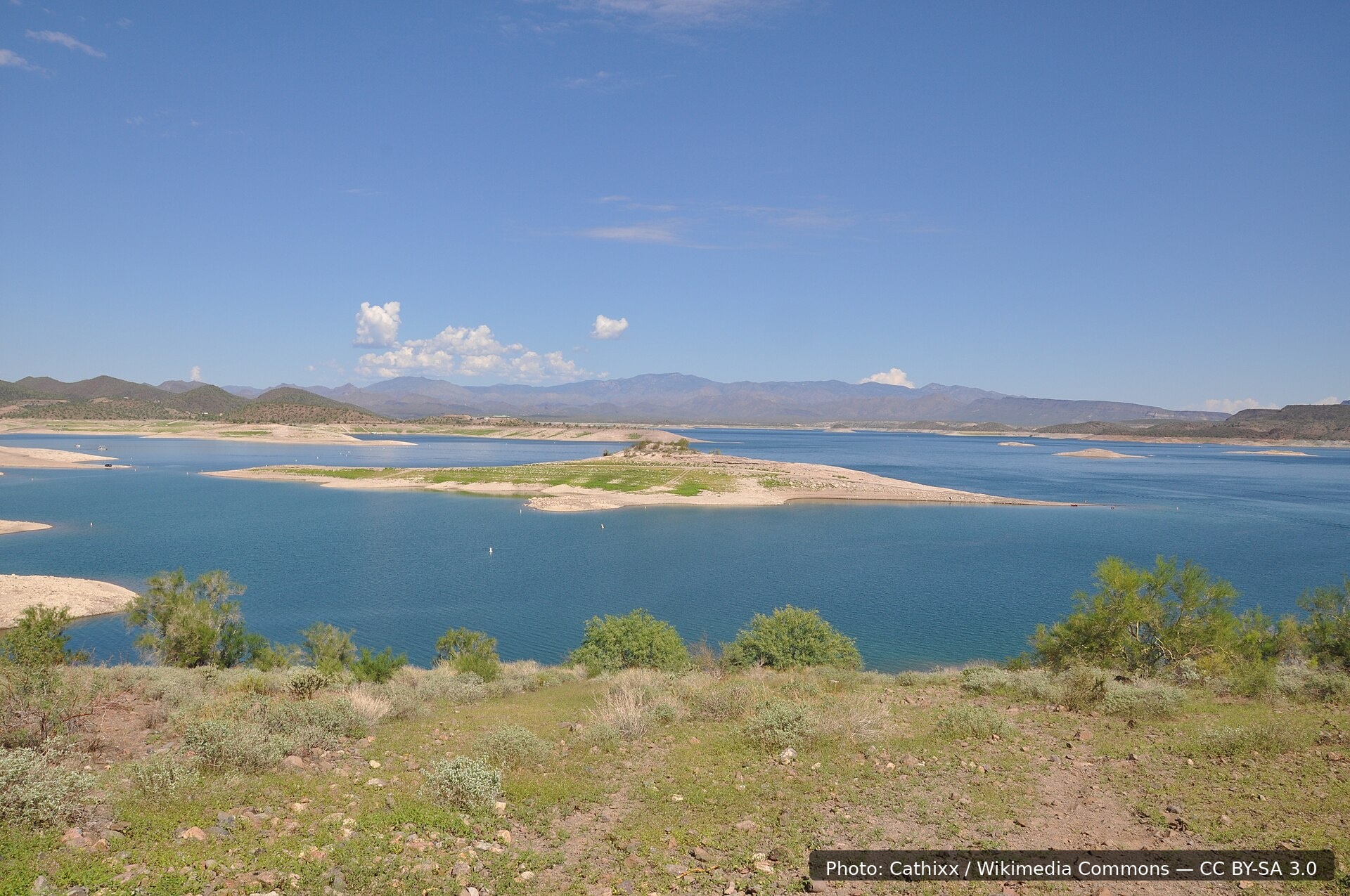
Lake Pleasant is one of the major landmarks associated with northern Peoria. Lake Pleasant Regional Park provides access to boating, fishing, swimming, hiking, camping, picnicking, and other outdoor recreation.
There is also more going on with the lake than recreation.
Lake Pleasant is a reservoir within the Central Arizona Project water system, which carries Colorado River water into central and southern Arizona. Because it operates as a reservoir, the water level changes throughout the year.
That is one reason Lake Pleasant can look noticeably different depending on when you visit.
Quintero Adds Another Side to Golf in the Peoria Area
Golf around Peoria is not limited to courses surrounded by dense development.
Quintero Golf Club uses a Peoria mailing address and is located along State Route 74 northwest of the more developed portions of the Valley. The Rees Jones-designed course stretches more than 7,200 yards from its championship tees and incorporates elevation changes, desert terrain, bunkering, and multi-level greens.
Its location also shows how quickly the landscape changes as you move away from the busier parts of Peoria and toward the Lake Pleasant and desert foothill areas.
It is another example of why the broader Peoria area can be difficult to summarize with one landscape.
Shopping and Restaurants Are Spread Across Peoria
Like the housing, Peoria’s shopping and dining are not concentrated in just one part of the city.
P83 has restaurants, shopping, and entertainment around Peoria Sports Complex.
Farther south, Park West sits near Loop 101 and Northern Avenue and provides another concentration of restaurants, shops, and entertainment.
Farther north, the Lake Pleasant Parkway and Happy Valley Road area has grown into another major commercial area. The intersection is sometimes referred to locally as “Four Corners,” with multiple shopping centers located around it.
Downtown Peoria has a different scale, with arts, parks, historic structures, gathering spaces, and smaller commercial areas mixed into the older portion of the city.
Where someone shops or eats in Peoria can therefore depend quite a bit on which part of the city they are already in.
Peoria Even Crosses a County Line
One fact that is easy to miss is just how far north Peoria extends.
Most of the city is located in Maricopa County, but Peoria’s municipal boundaries extend into Yavapai County in the far northern portion of the city.
That does not affect most Peoria properties, but it helps put the size and geography of the city into perspective.
Peoria stretches much farther north than someone unfamiliar with the area might expect from looking only at the more developed portions around Bell Road or Loop 101.
The Housing Changes Along With the City
Peoria developed over many decades and across a large geographic area, so there is no single type of “Peoria home.”
Different parts of the city contain homes built during different periods. Lot configurations, architectural styles, HOA structures, community amenities, construction years, and property restrictions can vary from one neighborhood to another.
Some areas have been established for decades. Other portions of Peoria contain considerably newer development.
That is why two homes with Peoria addresses can have very different surroundings even when the properties themselves appear similar in an online search.
The immediate neighborhood, road access, construction year, lot, governing documents, and surrounding development can all provide useful context beyond the basic listing information.
Downtown Peoria Is Still Part of the Story
As Peoria expanded north, the original downtown area remained part of the city’s history.
Today, Downtown Peoria includes Osuna Park, public art, historic structures, community gathering spaces, and the Peoria Center for the Performing Arts.
That creates an interesting contrast within Peoria itself.
Drive from Downtown Peoria toward P83 and the Sports Complex, then continue north toward Lake Pleasant, and you are moving through very different stages of the city’s development.
It is one of the reasons a broad search for Peoria real estate does not always tell you much about what the immediate area around an individual property will look like.
Outdoor Recreation Goes Beyond Lake Pleasant
Lake Pleasant may be the most recognizable outdoor destination associated with Peoria, but it is not the only place to get outside.
Peoria has neighborhood and community parks along with public trails located throughout different parts of the city. Trail access includes areas around Sunrise Mountain, WestWing Mountain, the New River Trail, and other locations.
In north Peoria, Paloma Community Park includes sports fields, a fishing lake, pickleball courts, pathways, a dog park, playground areas, and other recreation facilities.
Once again, location within Peoria makes a difference. The parks, trails, shopping areas, and recreation options closest to one property may be very different from those near another property elsewhere in the city.
What to Review With an Individual Peoria Property
Because Peoria covers such a large area and includes housing from different periods, basic search filters only provide part of the information.
Depending on the property, useful details to review can include:
- Municipal and county jurisdiction
- Construction year and major updates
- HOA or other governing documents, when applicable
- Lot configuration and usable outdoor space
- Permit records for significant additions or alterations
- Nearby road access
- Existing surrounding development
- Approved or proposed development when relevant and verifiable
- Applicable zoning or property restrictions
- Location relative to shopping, recreation, and other destinations
None of those factors automatically makes one property better than another. They simply provide more context when comparing individual homes.
A Peoria address is a useful starting point. The details surrounding the individual property help complete the picture.
Peoria Is Hard to Sum Up With One Neighborhood
Peoria began as a small Arizona settlement named after a city in Illinois. Today, its boundaries stretch from historic Downtown Peoria through established neighborhoods, spring training and entertainment areas, newer development, and the desert surrounding Lake Pleasant.
Along the way there is an unusual “Rose Capital of the World” chapter in the city’s history, a spring training complex designed around two Major League Baseball organizations, golf in the desert near Quintero, public art, parks, trails, shopping, restaurants, and one of the Valley’s major reservoirs.
That range is what makes Peoria difficult to explain with a single neighborhood description.
The word Peoria tells you the city.
Where a property sits within Peoria helps tell you the rest of the story.

Austin Earl
REALTOR® | Austin Earl - McClain Team | Realty ONE Group
or another way